
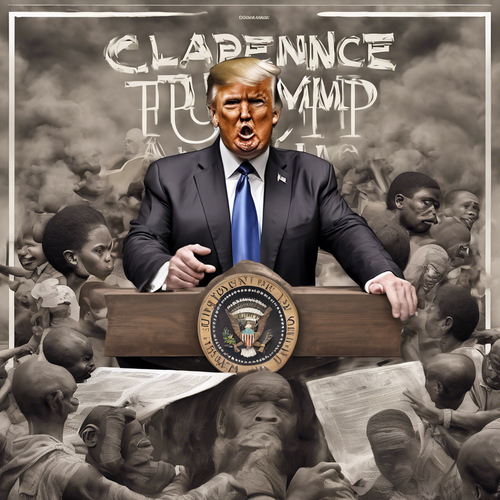
Clarence Page: President Donald Trump’s Grudge Against South Africa is Based on Racist Fiction
President Donald Trump’s controversial remarks about South Africa have reignited heated debates about race, history, and political rhetoric in America. 🌍 In recent years, Trump has repeatedly claimed that crime and land grabs directed against white farmers are rampant in South Africa, a narrative that not only lacks empirical support but also echoes the racist sentiments that have plagued discussions about race for decades. Historical misrepresentation can lead to a dangerous disconnect between perception and reality.
The Roots of Misinformation
The roots of Trump’s portrayal of South Africa can be traced back to a broader history marred with colonialism and apartheid. The nation has struggled under the complexities of its past, but Trump’s comments disregard significant progress made since the end of apartheid in 1994. Instead of acknowledging these strides, his rhetoric often casts South Africa as an example of impending chaos, thus perpetuating a false narrative that resonates with certain segments of the American populace. 📊
Fact-checking organizations have repeatedly debunked Trump’s assertions regarding the threat to white landowners and the supposed epidemic of violence against them. According to data from the South African government, the majority of violent crime in the country is concentrated in urban areas and is predominantly non-racial in nature. Moreover, proposed land reform initiatives, aimed at redressing historical injustices, are often presented without context, overshadowing their goals of equity and reconciliation.
The Impact of Perception on Policy
This skewed perception leads to dangerous political rhetoric, where misinformation can impact international relations and domestic policies. Trump’s narrative not only harms diplomatic ties but also inflates tensions within the United States, where racial divisions remain deeply entrenched. His comments can embolden extremist views and play into larger societal narratives of fear and division — a strategy that has proven effective in rallying support, albeit through fabricated fear. ⚖️
Media’s Role in Shaping Narratives
The media plays a crucial role in shaping public discourse around these topics. Outlets that amplify Trump’s claims without proper context contribute to a cycle of misinformation that can have real-world consequences. The responsibility lies with journalists and editors to scrutinize these assertions and provide then necessary context to the audience, helping to foster a more informed public. The repeated emphasis on sensationalism over substance can dilute the realities of progressive changes occurring in South Africa. 📺
“Misinformation thrives in environments where context is overlooked. It’s our duty as vigilant consumers of information to question narratives that seem too convenient or too sensational,” remarks media analyst, Dr. Hanifa Peters. 🧐
Understanding the Bigger Picture
To understand Trump’s grudge against South Africa, one must delve beyond the surface-level grievances to appreciate the historical and social fabric of the nation. This includes recognizing the complexity of land reform, which is not merely a matter of racial tensions but involves land restitution and the adaptation of traditional farming methods amid shifting economic frameworks. This broader perspective enriches the dialogue around race and socio-economic equity, moving beyond the divisive rhetoric embraced by far-right groups. 🌿
Conclusion: A Call for Critical Inquiry
As conversations around race and history continue to evolve, it is critical that rhetoric, especially from figures like President Trump, is met with diligent inquiry and contextual understanding. The fight against misinformation is not just about correcting facts; it is about fostering a more equitable and informed society that values diversity and the rich histories that shape contemporary realities. Responding to narratives rooted in racism requires a commitment to compassionate dialogue and a willingness to confront uncomfortable truths. 🗣️
In the end, progressive change can emerge from understanding, not ignorance. A true reckoning with South Africa’s past—and our own—challenges all of us to reassess our perspectives, fight against misinformation, and embrace a future where equity is not just a slogan, but a mission. 🌈