
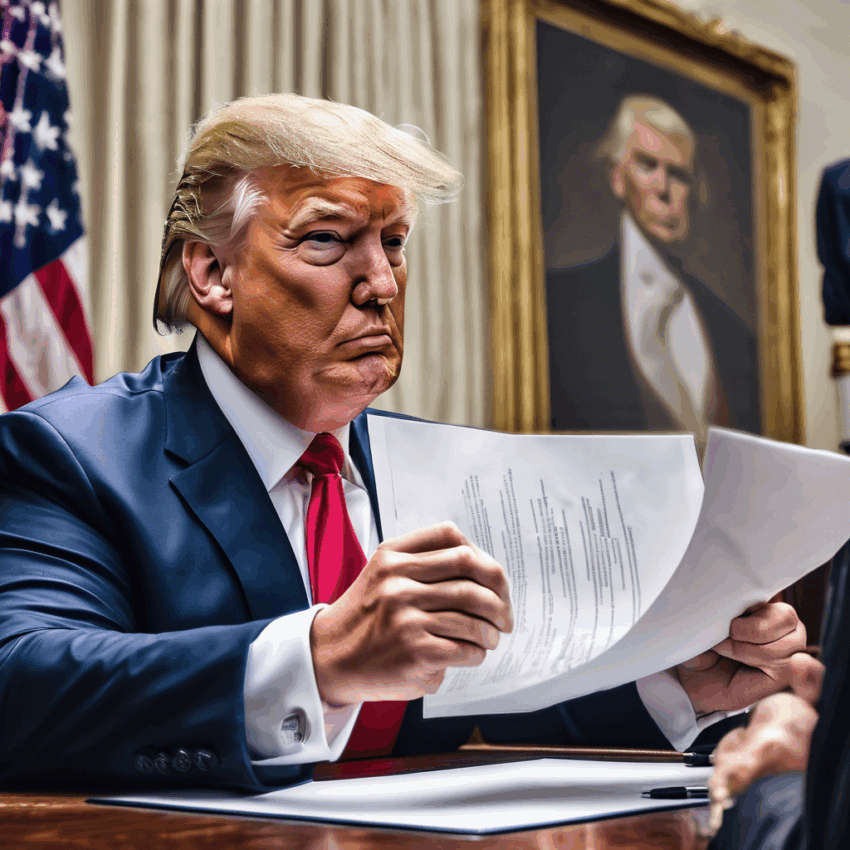
Trump Launches Bid to Curtail Public Broadcasting Funds Via Executive Order 🏛️
In a move reigniting a long-standing ideological battle, President Donald Trump signed an executive order today directing federal agencies to identify and prepare for significant reductions in funding allocated to the Corporation for Public Broadcasting (CPB), the primary conduit for federal support to PBS television stations and NPR radio networks across the country. The directive, framed by the administration as a necessary step toward fiscal responsibility and a reevaluation of federal priorities, immediately drew sharp criticism from supporters of public media and praise from conservative groups who have long questioned the use of taxpayer dollars for broadcasting services. 💰
The executive order does not, by itself, cut funding – an action that requires Congressional appropriation – but it mandates a government-wide review led by the Office of Management and Budget (OMB) to scrutinize CPB grants and their alignment with administration objectives. It instructs agencies to prepare detailed proposals for scaling back or eliminating support in future budget cycles, potentially setting the stage for contentious appropriations fights ahead.
Administration officials, speaking on background, emphasized the President’s concern over the national debt and argued that organizations like PBS and NPR should rely more heavily on private donations and corporate sponsorships, rather than federal subsidies. “The media landscape has changed dramatically,” one senior official stated. “With countless private news and entertainment options available, the argument for taxpayer support of specific broadcasters is weaker than ever. We must ensure every federal dollar is spent effectively and targets essential government functions.”
Decades of Debate Over Federal Role
The push to reduce or eliminate federal funding for public broadcasting is not new. Presidents and congressional members from both parties have debated the merits of CPB funding since its inception following the Public Broadcasting Act of 1967. Critics, predominantly conservative, have often argued that PBS and NPR exhibit a left-leaning bias 📰, making federal funding inappropriate. Proponents counter that public broadcasting provides essential educational programming 📺, supports independent journalism, and offers vital services, particularly in rural or underserved communities where commercial options are limited 📻.
Federal funding constitutes a relatively small portion of the overall budgets for both PBS and NPR nationally, and an even smaller share for many individual member stations. According to recent CPB data, federal appropriations typically account for around 10-15% of the total revenue for the public broadcasting system nationwide. The bulk of funding comes from viewers and listeners (“viewers like you”), foundations, and corporate underwriting. However, advocates stress that federal dollars provide crucial seed money and operational support, especially for smaller stations that lack large donor bases.
“This executive order sends a chilling message,” said Patricia Harrison, President and CEO of the Corporation for Public Broadcasting, in a statement. “Federal funding is essential for ensuring universal access to non-commercial, high-quality content. It leverages significant private investment and supports local stations that are anchors in their communities.”
Potential Impact and Political Ramifications 📉📈
While the immediate financial impact is nil pending Congressional action, the executive order signals a clear policy direction. The OMB review could lead to specific line-item reduction proposals in the President’s next budget submission to Congress. Past attempts by the Trump administration to zero out CPB funding in budget proposals were ultimately rejected by Congress, which included bipartisan support for maintaining the funding, albeit sometimes at slightly reduced levels compared to prior years.
The order could disproportionately affect smaller, rural stations that rely more heavily on the stability provided by federal grants distributed through CPB. These grants often support infrastructure, transmission costs, and the creation or acquisition of programming that might otherwise be unaffordable.
Supporters of the President’s move cheered the directive. “It’s high time we stopped forcing taxpayers to subsidize media outlets that many find politically biased,” commented Dan Gainor, Vice President at the Media Research Center, a conservative watchdog group. “PBS and NPR are capable of standing on their own two feet through the support of their audience and sponsors.”
The debate is likely to intensify as the OMB review progresses and budget negotiations loom. Public broadcasting advocates are mobilizing, highlighting popular programs like “Sesame Street,” “PBS NewsHour,” “Frontline,” and NPR’s “Morning Edition” and “All Things Considered” as examples of valuable public service funded, in part, by federal support. The political fallout will depend on Congress’s willingness to follow the administration’s lead or continue its historical pattern of providing generally stable, albeit debated, funding for the CPB.
The executive order marks another chapter in the ongoing culture wars and debates over the role and scope of government funding in American society, particularly concerning media and information access.
I think cutting funding for PBS & NPR is a mistake. They provide valuable, unbiased news and educational content. Lets keep them funded!
I cant believe Trump is trying to cut PBS & NPR funding! What about Big Bird and Wait Wait… Dont Tell Me? Unbelievable move 🤨📺📻