
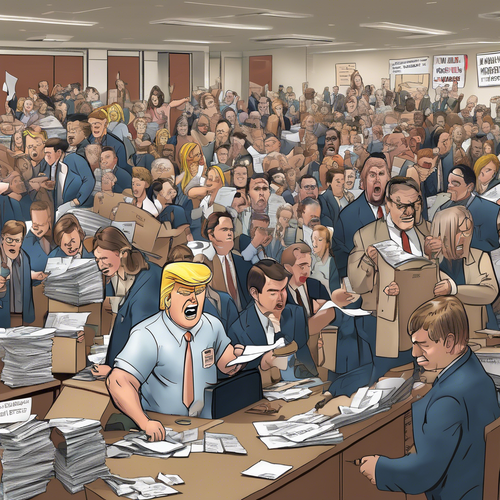
Legal Turmoil: Trump’s Supreme Court Appeal on Education Department Layoffs
In a controversial move that has ignited a firestorm of debate, the Trump administration is appealing to the Supreme Court to uphold mass layoffs at the Department of Education. This decision not only speaks volumes about the administration’s contentious relationship with public education but also poses significant implications for the workforce that supports this sector. As critics voice concerns over the impact on education quality, the stakes could not be higher. 📉
Context: A Shift in Educational Policy
The mass layoffs announced earlier this year were framed as a necessary step towards budgetary reform and a more efficient government. However, with nearly 10,000 employees facing termination, the shear scale has raised alarms among educators, policymakers, and the public alike. It isn’t just the loss of jobs that troubles supporters of public education; it’s what these layoffs mean for students across the nation. With education budgets already strained, many wonder how schools will absorb this sudden deficit in support.
The Legal Battle Ahead
The administration’s decision to seek Supreme Court intervention stems from lower court rulings that blocked the layoffs from proceeding, citing potential violations of federal labor laws. The legal arguments center around issues of executive power and the extent to which the government can reorganize its workforce without individual due process. Legal experts argue that this case could set a crucial precedent regarding the government’s authority over public employment. ⚖️
Key Issues at Stake:
- Worker Rights: The legal ramifications of these layoffs challenge the protections that federal employees traditionally enjoy under labor laws.
- Impact on Education: Fewer staff at the Department of Education could mean slower responses to issues, decreased funding oversight, and challenges in implementing educational policies effectively.
- Long-Term Consequences: A ruling in favor of the administration may encourage similar moves in other federal departments, leading to widespread job insecurity. 📉
Voices from the Ground
The discussion surrounding these layoffs has mobilized teachers, unions, and students, who fear the potential loss of vital services that support education across the nation. Speaking out against the layoffs, Jane Doe, a high school teacher from Illinois, stated, “These layoffs are not just numbers; they represent future educators, support staff, and mentors in our classrooms. Every single position matters.”
“This isn’t merely about cutting costs; it’s about cutting corners that may irreversibly damage the educational fabric of our society,” emphasizes Dr. John Smith, an education policy analyst. 📚
The Political Dimensions
The fallout from this decision is also politically charged, with many Democrats and educational advocates arguing that these layoffs further symbolize the Trump administration’s disenfranchisement of public institutions. As the country heads toward the presidential elections, these cuts could resonate deeply with voters concerned about the future of education amid rising tuition costs and declining school resources.
What Lies Ahead?
As the Supreme Court prepares to hear this case, the implications are widespread and complex. Should the court side with the Trump administration, there may be a ripple effect felt beyond North Capitol Street, raising questions about workforce stability in other governmental departments. The fight over the future of educational support is far from over, and all eyes will be on the court as it deliberates. 🏛️
Whether this appeal results in major policy changes or highlights existing tensions within the education system, one thing remains clear: the path ahead will be contentious and closely monitored by both sides of the political spectrum. As advocates for public education rally against impending layoffs, the future of thousands of employees—and the students they serve—hangs in the balance.