
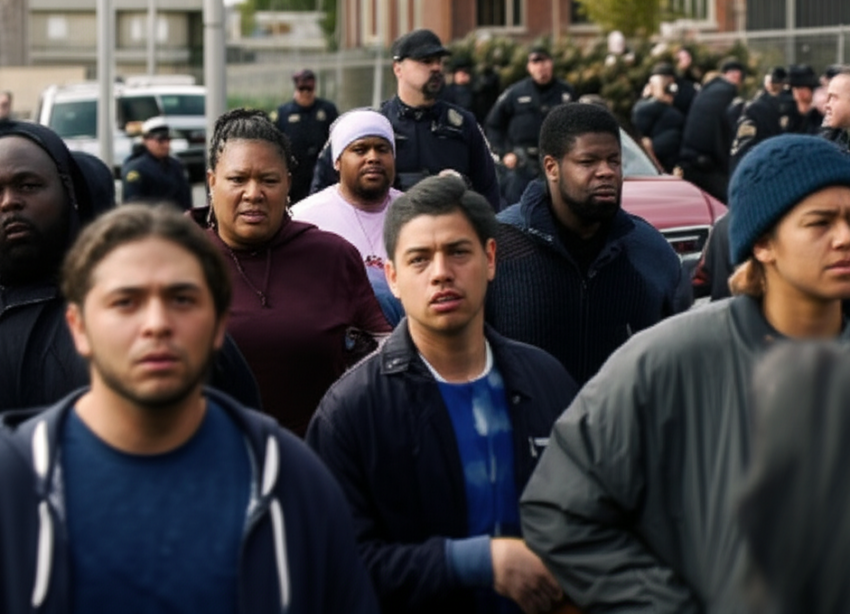
One Dead in North Side Police Shooting: An Anatomy of a Fractured Trust⚖️🚔
In the twilight shadows of a chilly North Side evening, a gunshot rang out — echoing not just through streets but through the collective conscience of a city. One life lost, a community shaken, and yet another chapter added to the uneasy narrative of police-involved shootings in urban America. This latest fatal encounter, reported late Monday, is a stark reminder that beneath the flashing lights and sirens lies a complex interplay of fear, duty, and history.
The Scene: More Than a Moment
According to preliminary reports from the City Police Department, officers responded to a call regarding a “disturbance” in a residential block known as a hotspot of socioeconomic tension. What unfolded, however, remains clouded by competing narratives and beguiling uncertainties—the kind that transform a street corner into a battlefield of memory and media.
One man is dead; the police official statement claims he was armed and posed an imminent threat. Yet, eyewitness accounts paint a more tangled picture, suggesting hesitation followed by a flash—like a summer storm snarling the calm sky. In moments like these, truth is often a shifting mirage, harder to pin down than a shadow on a breakwall.
“It was like watching a thunderclap split the air, sudden and loud. Then silence, heavy as grief.” – An eyewitness to the shooting
Irony in the Age of ‘Protect and Serve’
Isn’t it paradoxical that in neighborhoods most scarred by violence, the very custodians of peace are viewed through spectacles of suspicion and fear? This fatal shooting highlights the acute antithesis between the principle of “serve and protect” and the reality of many urban encounters where service blurs into confrontation. The policing that promises sanctuary sometimes resembles a tempest at sea — powerful, unpredictable, and inescapable.
The city touts progressive reform policies and rigorous officer training programs, yet the tragic arithmetic of shootings does not seem to waver. Each incident becomes a bittersweet chapter of reform promises shadowed by familiar outcomes. How many times can a community rebuild trust on foundations as brittle as autumn’s last leaf?
Beyond the Headlines: The Human Element
It’s critical to look beyond ballistic trajectories and official statements to the human beings caught in this violent dance. A man’s life snuffed out like a candle in a harrowing gust, leaving behind memories, loved ones, and unanswered questions ringing louder than the gunshot itself. Police officers too face psychological scars unseen by the public eye, tasked to respond instantly to threats often cloaked in ambiguity.
The city’s emergency response logs reveal that over 57% of police-involved shootings in the past five years occurred in neighborhoods with persistent poverty and limited access to social services. This is no accident but a harrowing map of systemic neglect juxtaposed with enforcement-heavy responses—a condition as jarring as a rose blooming in a cracked sidewalk.
The Community’s Dilemma: Speak or Silence?
In the North Side, where every streetlight flickers with history, residents oscillate between two uneasy choices: cling to silence out of fear, or raise voices that tremble with hope and anger. The social fabric here is a tapestry of irony—rooted deeply in resilience yet fraying at the edges with every fatal encounter. Activists argue for transparency and accountability, while others warn against blanket condemnation of officers who act under extreme duress.
This duality echoes wider national debates on law enforcement reform, racial justice, and public safety. It’s an intricate dance around questions that defy easy answers: How do we balance safety with freedom? Order with empathy? Policing with human dignity?
What Comes Next? Few Answers, Many Reflections
This North Side shooting forcibly asks: in a society that claims to champion justice and equality, what price does the innocent—or those perceived as threats—pay? What cost for community peace when the protectors become perceived predators? The answers do not lie solely in policy or policing but in the tangled heartstrings of society’s collective conscience.
As city leaders call for calm and investigations unfold, the more profound reckoning remains suspended in the ether — will this be a catalyst for genuine change, or another mournful echo fading into the dusty archives? In the meantime, echoes of that fatal night linger — like an unhealed wound beneath the city’s skin, raw and yet invisible to many.
After all, when the threshold of trust is cracked, how many cracks does it take before it shatters completely? And who will sweep up the pieces after the storms have passed?