
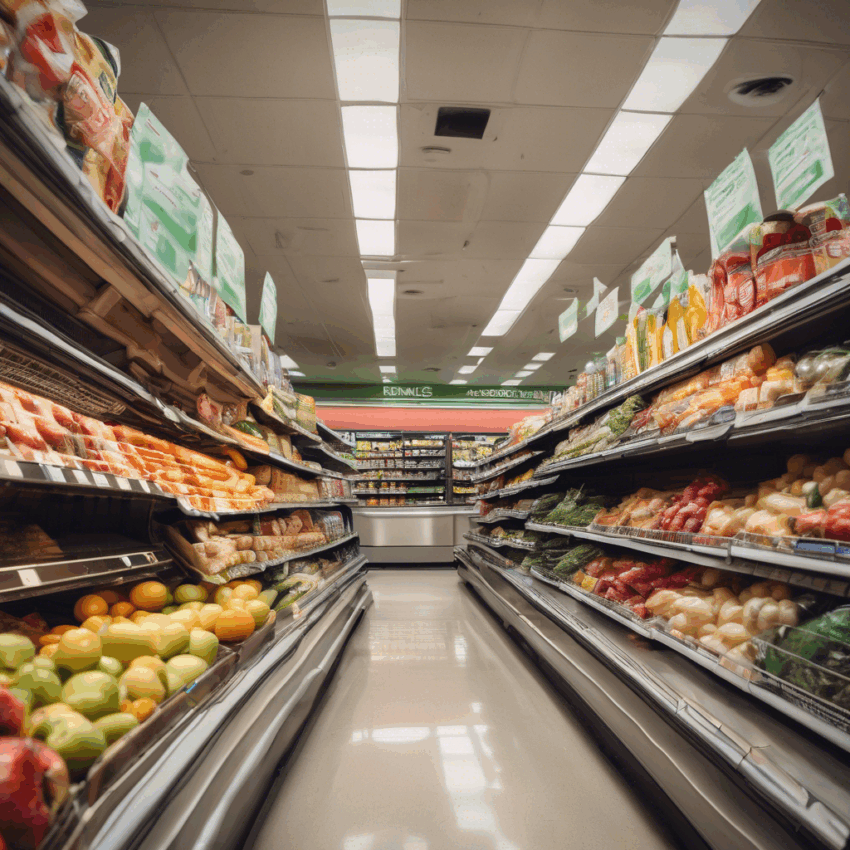
Relief on Aisle 3? Not So Fast: Local Grocery Taxes Spread as State Levy Ends 🛒
For months, residents across the state anticipated financial relief as the long-debated elimination of the state sales tax on groceries neared its final phase-out date. Billed as a significant measure to ease household budgets strained by persistent inflation, the repeal promised lower checkout totals. Yet, for many, that promised savings is proving elusive, immediately counteracted by a wave of new, locally imposed taxes on the very same essential items. 💰
Even as food prices continue their upward march 📈 – figures from the Bureau of Labor Statistics show food-at-home costs have surged dramatically over the past two years – dozens of towns and cities are moving to establish their own municipal sales taxes on groceries. This trend creates a confusing patchwork of tax policies and effectively claws back savings consumers expected, sparking frustration and debate.
The state-level repeal, often achieved with bipartisan support, was intended to directly address the regressivity of taxing essential food items, which disproportionately impacts lower- and middle-income families. Proponents argued that removing the tax, typically ranging from 1% to 4% depending on the state’s structure, would provide tangible relief amid soaring living costs.
Funding Fears Drive Local Tax Decisions 🏛️
Local government officials argue their hands are tied. The state’s elimination of its grocery tax share often translates into a significant revenue loss for municipalities, which frequently received a portion of that state tax revenue or relied on it as a baseline for their own budgets. Without replacement funds allocated by the state legislature, cities and counties say they face difficult choices: cut essential services like police, fire departments, schools, and road maintenance, or find alternative revenue sources.
“Nobody enjoys implementing a new tax, especially on food,” stated one city manager from a mid-sized municipality that recently approved a 1.5% local grocery tax. “But the state mandate removed a critical revenue stream without providing a replacement. We face a structural deficit that threatens our ability to provide basic services residents rely on. Taxing groceries, while regrettable, was deemed less painful than drastic cuts to public safety or education.”
Data highlights the dilemma: In some counties, the eliminated state grocery tax represented millions in annual revenue shared with local jurisdictions. Faced with already tight budgets exacerbated by inflation’s impact on operational costs (fuel for police cars, construction materials, employee wages), local leaders see few palatable options. Property taxes are often politically unpopular and can burden homeowners, while increasing sales taxes on other goods might not generate sufficient revenue or could drive shoppers to neighboring jurisdictions.
Consumers Caught in the Middle 🤔
For consumers, the result is often confusion and disappointment. The promise of state tax relief feels like a bait-and-switch. “I was really counting on that state tax going away to help my family’s budget,” shared Sarah Jenkins, a mother of two shopping at a suburban grocery store. “Now, my town adds its own tax. With prices already so high, it feels like we take one step forward and one step back. What was the point?” 🧾
Consumer advocates and anti-poverty groups echo these concerns, arguing that municipal grocery taxes retain the same regressive features as the state tax they replace. They hit lower-income households hardest, as these families spend a larger percentage of their income on essential food items.
“Reimposing food taxes at the local level undermines the entire purpose of the state repeal, which was to provide relief to those struggling most with food costs,” noted an economist specializing in tax policy. “It shifts the tax burden but doesn’t eliminate it, and it does so in a way that lacks transparency for many consumers who expected straightforward savings.”
The impact varies significantly depending on location. A resident in a town that implements a 2% local tax might see little to no net change if the state tax was also 2%. However, if the state tax was higher, say 4%, they might still see some savings, albeit less than anticipated. Conversely, in towns that previously benefited from a state tax share but didn’t have their own local add-on, residents now face a new tax they didn’t pay before, directly increasing their grocery bills despite the state repeal.
Economic Ripples and Political Fallout 📉
The emergence of varied local grocery taxes creates potential economic distortions. Shoppers living near municipal borders might be incentivized to cross into neighboring towns or counties with lower or no local grocery tax, potentially harming businesses in higher-tax areas.
This tax shuffle also presents political challenges. State legislators can point to fulfilling their promise of cutting the grocery tax, while local mayors and council members face direct criticism from constituents feeling the pinch of the new municipal levies. It fuels ongoing debates about the balance of fiscal responsibility between state and local governments and the adequacy of funding mechanisms for essential public services.
As more municipalities consider adopting their own grocery taxes, the debate intensifies. Questions linger about the long-term sustainability of local government finance, the fairness of consumption taxes on essential goods, and whether states should provide direct aid to localities when eliminating shared revenue sources. For now, consumers navigating the checkout line are left to decipher a complex tax landscape, finding that the promise of lower food bills remains, for many, just out of reach.
I dont get why local grocery taxes are replacing state relief. Seems like consumers are getting the short end of the stick. 🤷♂️
Wow, local grocery taxes replacing state relief? Thats a real twist. Whos benefiting from this change, the consumers or the government? 🛒🤔
Wait, so now local grocery taxes are replacing state relief? Thats just adding more stress to consumers in already tough times. 🤦♂️
Can you believe the nerve of these local governments sneaking in grocery taxes? Its like theyre trying to nickel and dime us at every turn!