
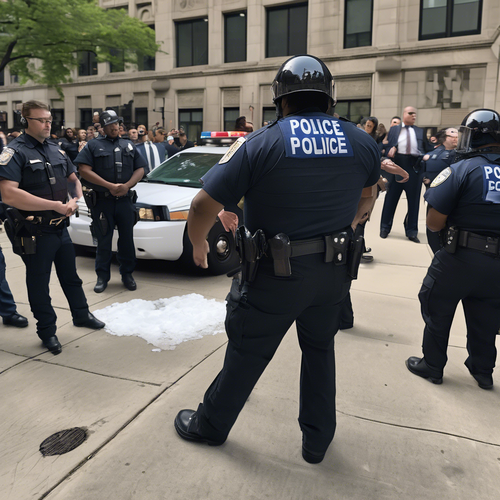
Aldermen Demand Hearing on Chicago Police Response to ICE Demonstration
In a significant display of civic engagement and political pressure, Chicago’s aldermen are calling for a hearing to scrutinize the city police’s handling of a recent demonstration against Immigration and Customs Enforcement (ICE). This demand not only emphasizes the ongoing tensions surrounding immigration policies but also raises critical questions about law enforcement’s role in public demonstrations and civil rights protection. 🗣️
The demonstration, organized by various activist groups, was intended as a peaceful protest against ICE’s treatment of immigrants, especially in light of heightened deportation efforts. However, many participants reported aggressive police tactics, including the deployment of crowd-control measures that sparked fears of bodily harm and civil liberties infringement. As hundreds marched through the city streets, chanting slogans promoting immigrant rights and justice, the police response was widely criticized for being overly militarized.
Alderpeople Weigh In: Concerns over Police Tactics
The aldermen’s call for a hearing not only reflects community concerns but also acknowledges an urgent need for transparency in law enforcement practices. According to Alderman Maria Hadden, “We need to ensure that the police are equipped to handle public demonstrations with the utmost respect for First Amendment rights.” She emphasized the importance of de-escalation training and community-based policing as essential components of modern law enforcement.
Recent statistics indicate that Chicago police have faced increased scrutiny regarding their crowd management techniques. A report from the Illinois Department of Human Rights noted that the use of excessive force complaints rose by 27% in 2021 alone, igniting debate over how police can balance maintaining order while protecting citizens’ rights during demonstrations. 📈
Constitutional Rights at Stake: Voices from the Ground
Activists and legal experts alike have lauded the aldermen’s initiative as a crucial step towards accountability, highlighting that incidents of aggression during peaceful protests can chill free speech. Legal scholar David H. Anderson explained, “The right to protest is enshrined in our Constitution. If the police response begins to look more like suppression than protection, we need to ask serious questions.”
“Peaceful protest plays a vital role in our democracy, and any response from law enforcement must reflect a commitment to protecting that right,” said civil rights attorney Maria Gonzalez. “Eyes are on Chicago—it remains a litmus test for how we handle dissent.”
The Broader Implications: National Attention on Chicago’s Policing
This local situation has potential national repercussions, echoing similar calls for reform across the United States. The Black Lives Matter protests and the subsequent public outcry have cast a long shadow on law enforcement practices, heightening scrutiny on police departments nationwide. What’s more, the movement against ICE’s activities is part of a larger, more complex dialogue around immigration reform and racial equity in law enforcement.
With voices on both sides of the debate urging action, the upcoming hearing is poised to become a pivotal moment. Activists argue that how law enforcement participates in demonstrations could set a precedent for future protests related to various social issues, including racial justice, economic equality, and public health rights. ✊
Looking Ahead: What the Hearing Might Uncover
As community leaders rally support for the proposed hearing, many anticipate not just a review of police procedures but also recommendations for training and policy reform. There has been increasing advocacy for mental health training for officers, emphasizing the development of soft skills to better navigate interactions during high-pressure situations, particularly in diverse communities.
The Chicago Police Department has committed to reviewing their crowd management protocols, but many observers remain skeptical. The outcome of the hearing will be pivotal. Will it lead to substantial changes in policy and procedural reforms, or will it simply serve as another iteration of promises not kept? 🎤
Voices of Reason: Weighing the Broader Context
In the face of ongoing national debates about policing, accountability, and civil rights, the action taken by Chicago’s aldermen cannot be underestimated. To many, it represents a turning point in how communities interact with their police forces. The implications stretch beyond Chicago, offering a potential template for cities grappling with similar dynamics. The forthcoming hearings promise not only to shed light on the events that transpired during the demonstration but also to guide future relations between law enforcement and the diverse communities they serve.
In the words of Alderman Hadden, “This is about more than one event. It’s about shaping a future where our communities feel safe to express their voices without fear.” As public attention turns to Chicago, the outcome of this hearing could echo far beyond the Windy City itself. 🌍