
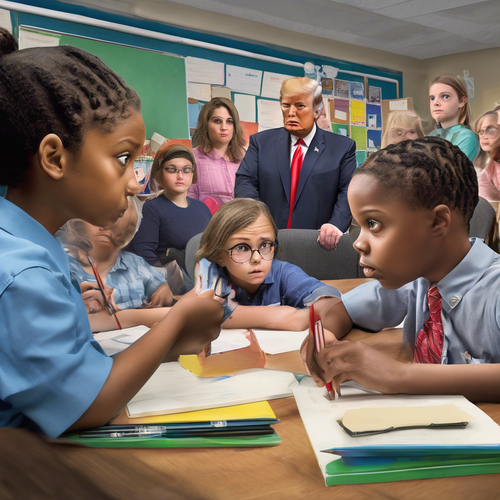
Curriculum Controversy: Trump Administration’s Stance on Education Grants and their Political Implications
The decision to withhold certain educational grants has ignited a firestorm of controversy, with the Trump administration asserting that these funds were being misallocated to promote a “leftwing agenda” in schools. This political tug-of-war over education funding has raised critical questions about the implications these actions hold for future educational policies and the environments students traverse daily. 🏫
Grants in Limbo: What’s at Stake?
As the Trump administration targeted education grants distributed through federal programs, it cited concerns that these resources were steering critical conversations and curricula towards progressive ideologies—potentially skewing the educational landscape toward a certain political slant.
In 2020, the Department of Education announced a review of several federal grants found to support initiatives aligned with what the administration deemed a leftist perspective. Among these were funds allocated to projects focusing on equity, diversity training, and environmental initiatives, often associated with progressive movements. This review led to delays in disbursement, leaving many educators and programs in uncertainty. ❓
Data in the Balance: The Financial Impact
Financially, the repercussions of this decision ripple across multiple dimensions of the educational system. According to data from the National Center for Education Statistics, federal funding constitutes an essential part of many school districts’ budgets, particularly those serving low-income populations. In a landscape already burdened by budget cuts and increasing needs, withholding these grants can jeopardize vital educational services, programs for at-risk students, and overarching initiatives aimed at systemic improvement.
Debating the Definition of “Agenda” 📚
Critics of the administration’s approach argue that labeling educational pursuits as a “leftwing agenda” misconstrues the fundamental purpose of public education—to promote diverse perspectives and critical thinking among students. Instead of showcasing a singular political ideology, education should serve as a platform for dialogue, fostering debate around social issues that resonate with youth.
“Education is not about indoctrination; it’s about exploration and understanding multiple viewpoints,” asserts Dr. Sarah Thompson, an education policy analyst. “When funding becomes politicized, we risk stifling the very creativity and innovation that education should nurture.”
“Teaching isn’t about pushing a narrative but equipping students to navigate through narratives,” states veteran educator Mark Adams. “Using education grants to further political objectives compromises our students’ learning landscape.”
Political Landscape and Public Reaction 🗳️
The politicization of education funding has elicited strong reactions from various stakeholders, including teachers, parents, and advocacy groups. Rallies advocating for equitable funding have sprung up across the nation, highlighting concerns over potential rollbacks of educational advances aimed at inclusivity and representation.
As educators grapple with balancing curriculum and funding, the reality remains stark: the fight for these grants is not merely about financing; it is about the ideological direction of education itself and the legacy left for future generations.
The Aftermath: The Future of Education Funding
With the political climate likely to remain contentious, the fate of these educational grants ultimately hangs in the balance. The challenge ahead will be navigating a path towards funding that reflects a commitment to comprehensive education—not limited by partisan politics.
Proposed reforms suggest careful consideration of how educational grants are structured and allocated, ensuring transparency and accountability without losing sight of the importance of diverse viewpoints in education. The key may lie in fostering collaborations that engage educators, policymakers, and community members alike in meaningful discussions about educational funding going forward.
If the Trump administration’s approach has taught us anything, it’s that the intersection of education and politics can be perilous. As the debate intensifies, one thing becomes clear: the future of American education hinges on a balanced dialogue that elevates teaching above ideology. 🔍