
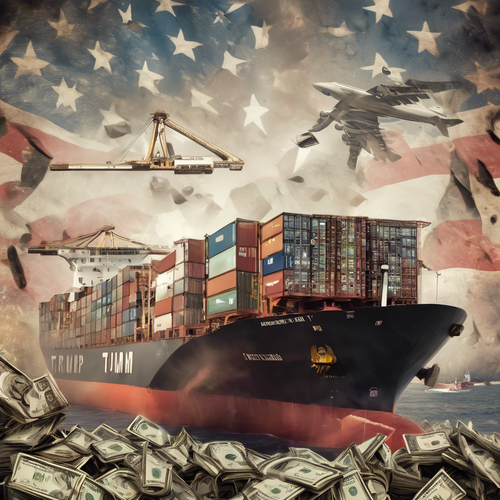
Unpacking the Costs: Trump’s Tariffs Could Burden U.S. Employers by $82.3 Billion
As the dust settles on President Trump’s imposition of tariffs on a range of goods, a stark reality has emerged: the projected financial burden on U.S. employers could reach a staggering $82.3 billion. This figure not only raises eyebrows but also calls into question the long-term economic strategies underlying these tariffs. 📉
In the realm of trade policy, the discussion surrounding tariffs often oscillates between protectionism and free trade. Yet, with a price tag this high, it’s crucial to dissect what these tariffs will mean for the employed and the economy as a whole.
The Economic Landscape: A Deeper Dive into Job Costs
Tariffs function as taxes on imported goods, intended to protect domestic industries from foreign competition. However, the impact of these tariffs can be a double-edged sword. According to a recent analysis by the Peterson Institute for International Economics, the burden falls not just on consumers but increasingly on employers, who face higher costs for raw materials and finished products.
“Tariffs may protect certain industries, but they can wreak havoc on others, leading to job losses and inflated prices for consumers,” notes Dr. Rachel Thompson, an economist at the Brookings Institution.
Breaking Down the $82.3 Billion Price Tag
To comprehend the implications of this financial burden, consider the following key points:
- Material Costs Rise: Companies reliant on imported materials are experiencing significant increases in costs, with some industries facing hikes of up to 25% on essential components. 🏗️
- Compounded Inflation: Ongoing tariff structures could lead to price increases for consumers, further fueling inflation. The Consumer Price Index (CPI) has already shown upticks that correlate with these trade policies.
- Global Supply Chain Strain: Tariffs disrupt global supply chains, leading to logistical challenges and potential delays that could cost companies trillions in lost productivity and revenues in the coming years.
The Ripple Effect: Industries at Risk ⚠️
While some sectors might benefit from tariffs, others are particularly vulnerable. The construction industry, retail, and agriculture face the heavy brunt of inflated material prices, resulting in a potentially hazardous ripple effect throughout the job market. For instance, many retail and manufacturing firms have already acknowledged they may have to cut jobs to offset these rising operational costs.
“The job market stability is intricately linked to the cost of imported goods. As those costs rise, companies are forced to make difficult decisions,” explains Mark Ramirez, a labor analyst.
Adaptation or Decline: Strategies for Employers
Faced with this daunting financial reality, U.S. employers must now explore strategic adaptations to mitigate the impact:
- Review Supply Chains: Companies are advised to reassess their supply chains, focusing on local sources that might offer more stability and lower risk during trade fluctuations.
- Innovation in Production: Investments in automation and efficiency within production lines help to offset some of the increased costs caused by tariffs.
- Engaging Consumers: Open dialogues with consumers about cost implications could foster understanding and potentially soften the impact of price rises on sales.
Looking Forward: The Long-Term Implications 🔍
The question remains: how sustainable are these tariffs and their economic burden in the long run? As the Biden administration takes the reins, discussions surrounding tariff policies may evolve. For now, U.S. employers brace for the storm, gearing up to navigate an increasingly complex trade environment.
Ultimately, the $82.3 billion hanging over U.S. employers serves as a clarion call for an urgent reassessment of trade strategies. With the economic implications of tariffs already apparent, the clock is ticking for businesses that must adapt or potentially face the consequences of an increasingly protectionist posture.